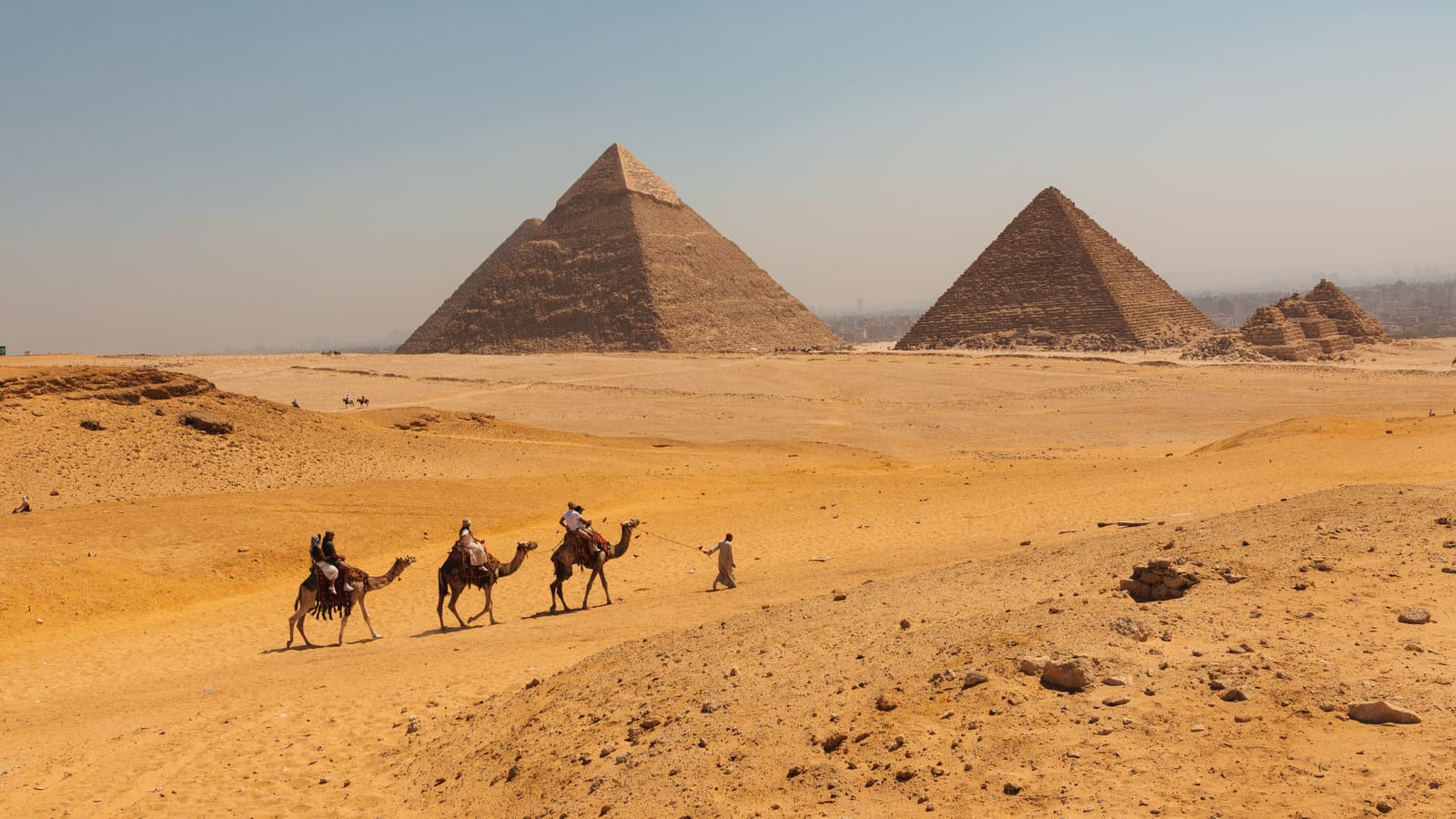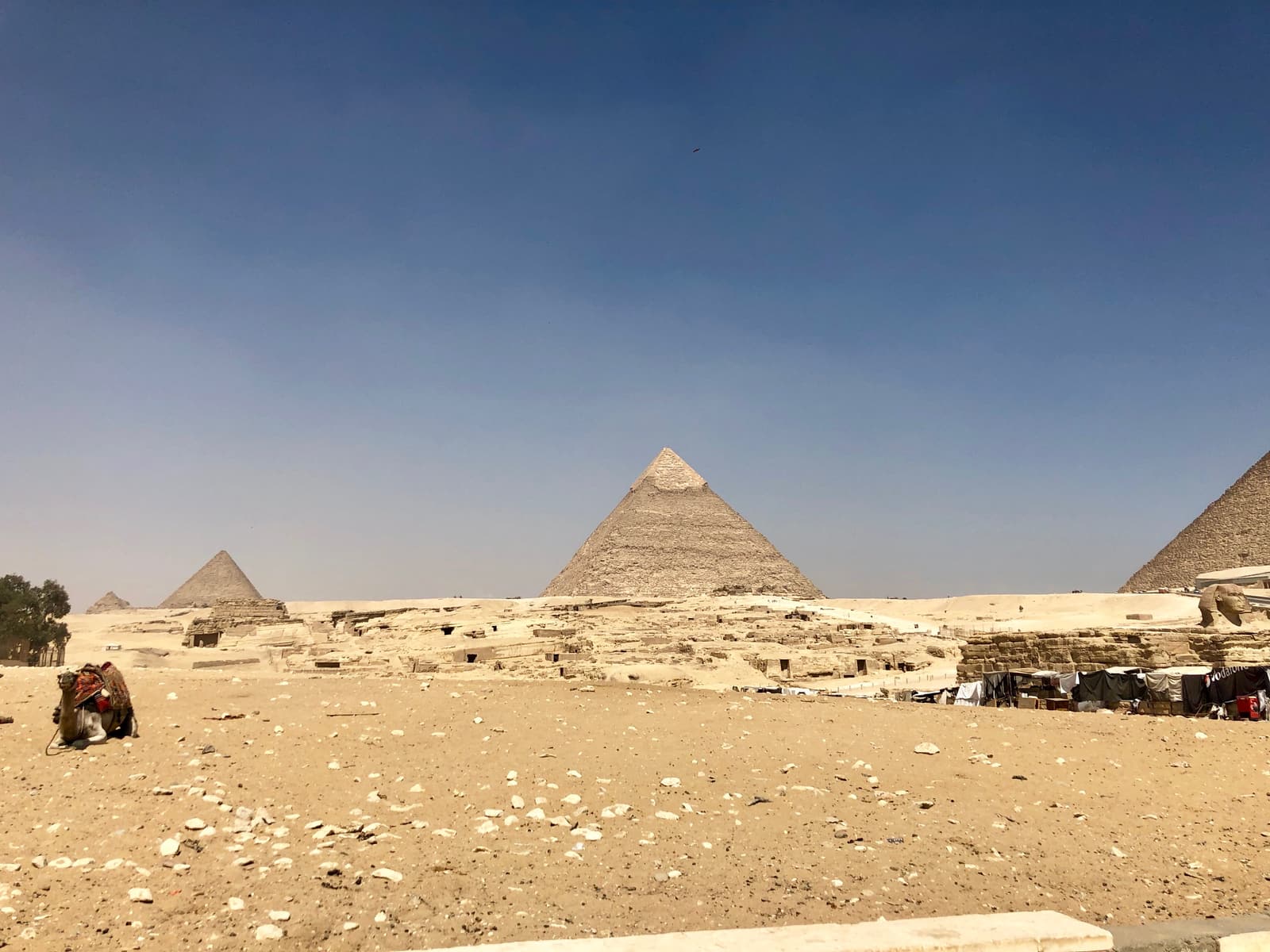
The Giza Plateau is one of the easiest world wonders to reach and, by reputation, one of the hardest to enjoy. The reputation is now out of date. Since 2025 the site has had a proper visitor centre, electric buses instead of traffic, and fixed areas for camels and vendors. You still need to arrive prepared — this page is the briefing.
Tickets at a glance
Prices for foreign visitors are set in Egyptian pounds by the Ministry of Tourism and Antiquities and have been raised most years. The figures below are indicative only — check the official ticketing site for current rates. Students with a valid ISIC card generally pay half.
| Ticket | What it covers | Rough price (foreign adult) | Notes |
|---|---|---|---|
| Giza Plateau general entry | The site, the Sphinx enclosure, Valley Temple and electric buses | Around EGP 700 | Required for everyone |
| Great Pyramid of Khufu interior | Grand Gallery and King’s Chamber | Around EGP 1,500 | Limited daily numbers; buy early |
| Khafre or Menkaure interior | Burial chamber of whichever is open | A few hundred EGP | One is usually closed in rotation |
| Tomb of Meresankh III | Painted rock-cut tomb in the Eastern Cemetery | A modest extra fee | Opening can vary |
| Grand Egyptian Museum | All galleries, Tutankhamun and the Khufu boats | Around EGP 1,450 | Separate site; timed entry, book online |
| Sound and Light show | One-hour evening show facing the Sphinx | Roughly US$20–25 | Separate evening ticket |
 On the Giza Plateau
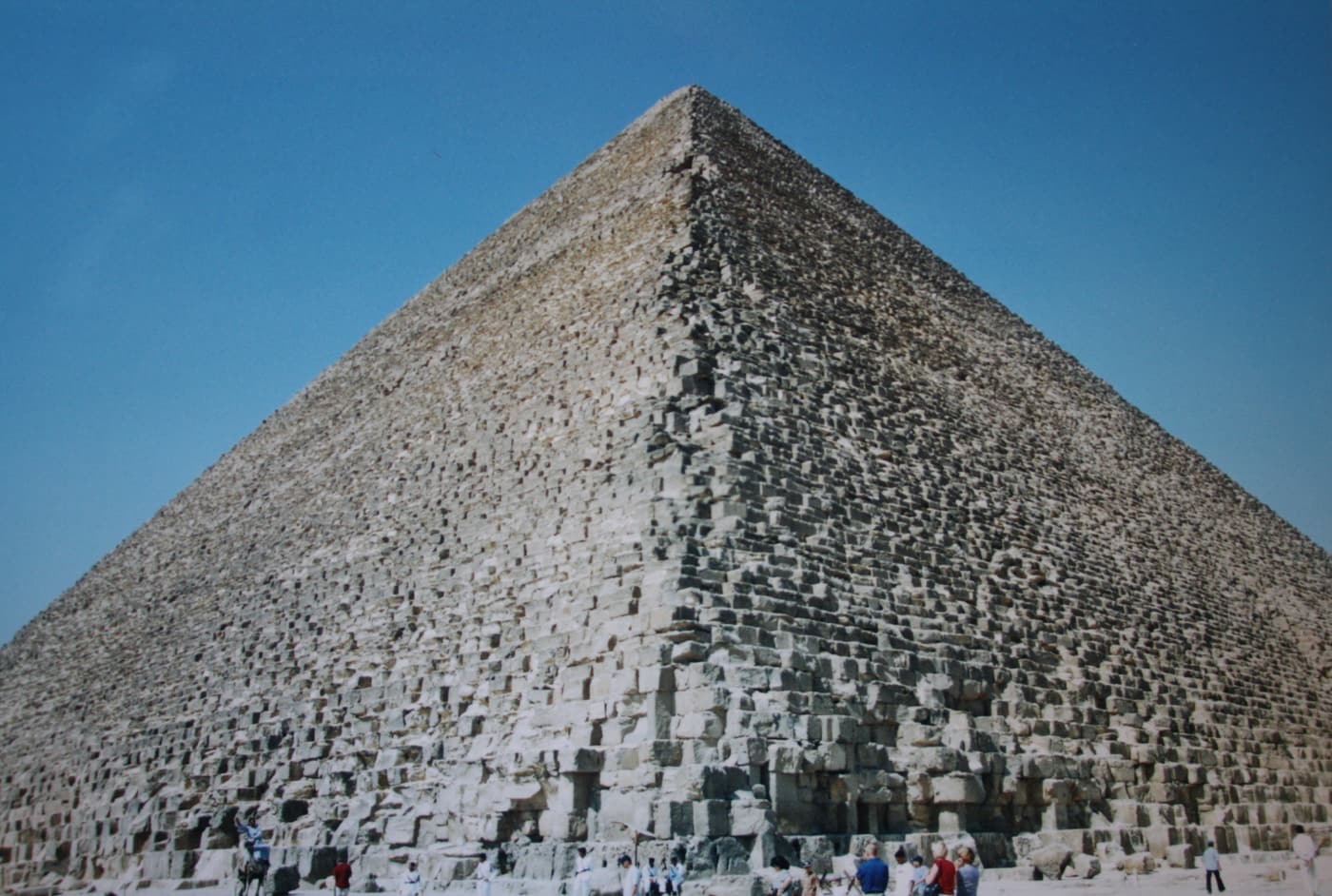
Great Pyramid of Khufu
The last wonder of the ancient world
Built for King Khufu around 2560 BC from some 2.3 million blocks, the Great Pyramid stood 146.6 metres high and was the tallest building on Earth for nearly four thousand years. You can climb inside through the Grand Gallery to the granite King’s Chamber.
 On the Giza Plateau
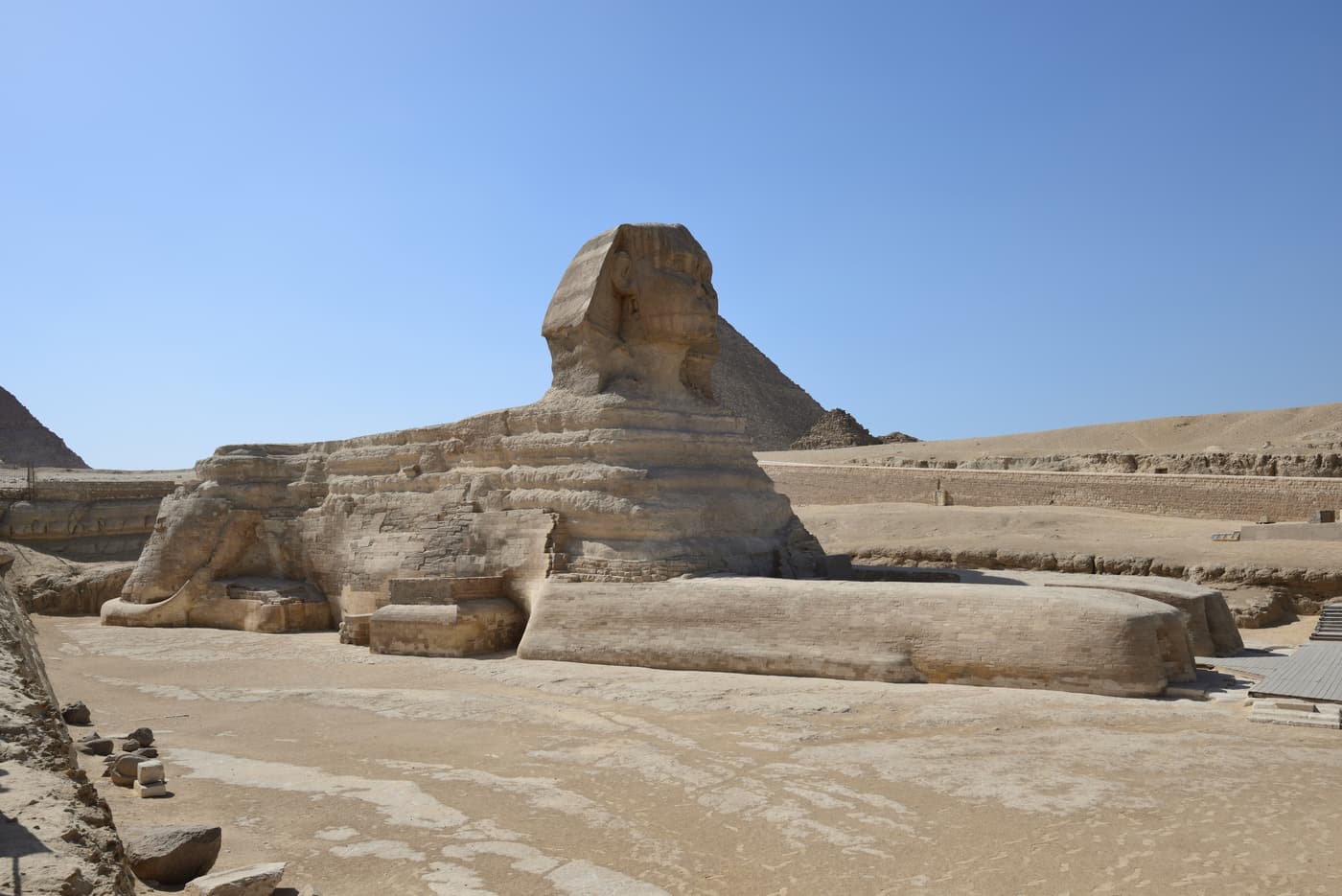
Great Sphinx & Valley Temple
The guardian of the plateau
A lion with a king’s head, carved from a single outcrop of limestone some 4,500 years ago and 73 metres long. You reach its viewing terrace through the Valley Temple of Khafre, a severe masterpiece of red granite and alabaster.
 On the Giza Plateau
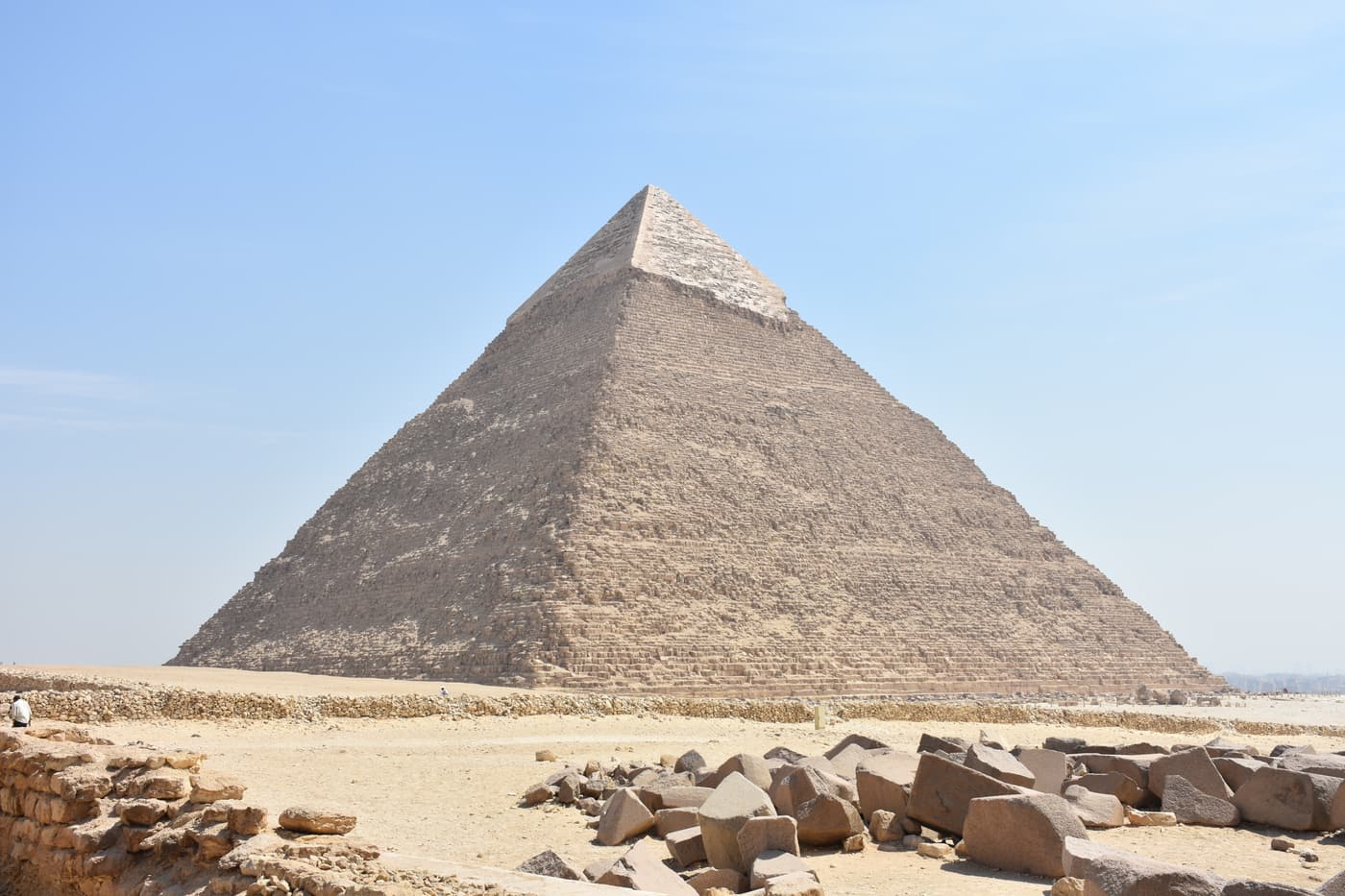
Pyramid of Khafre
The one that still wears its casing
Khufu’s son built the second pyramid on higher ground, so it looks the tallest of the three. Its summit still carries a cap of the smooth white limestone that once covered every pyramid at Giza.
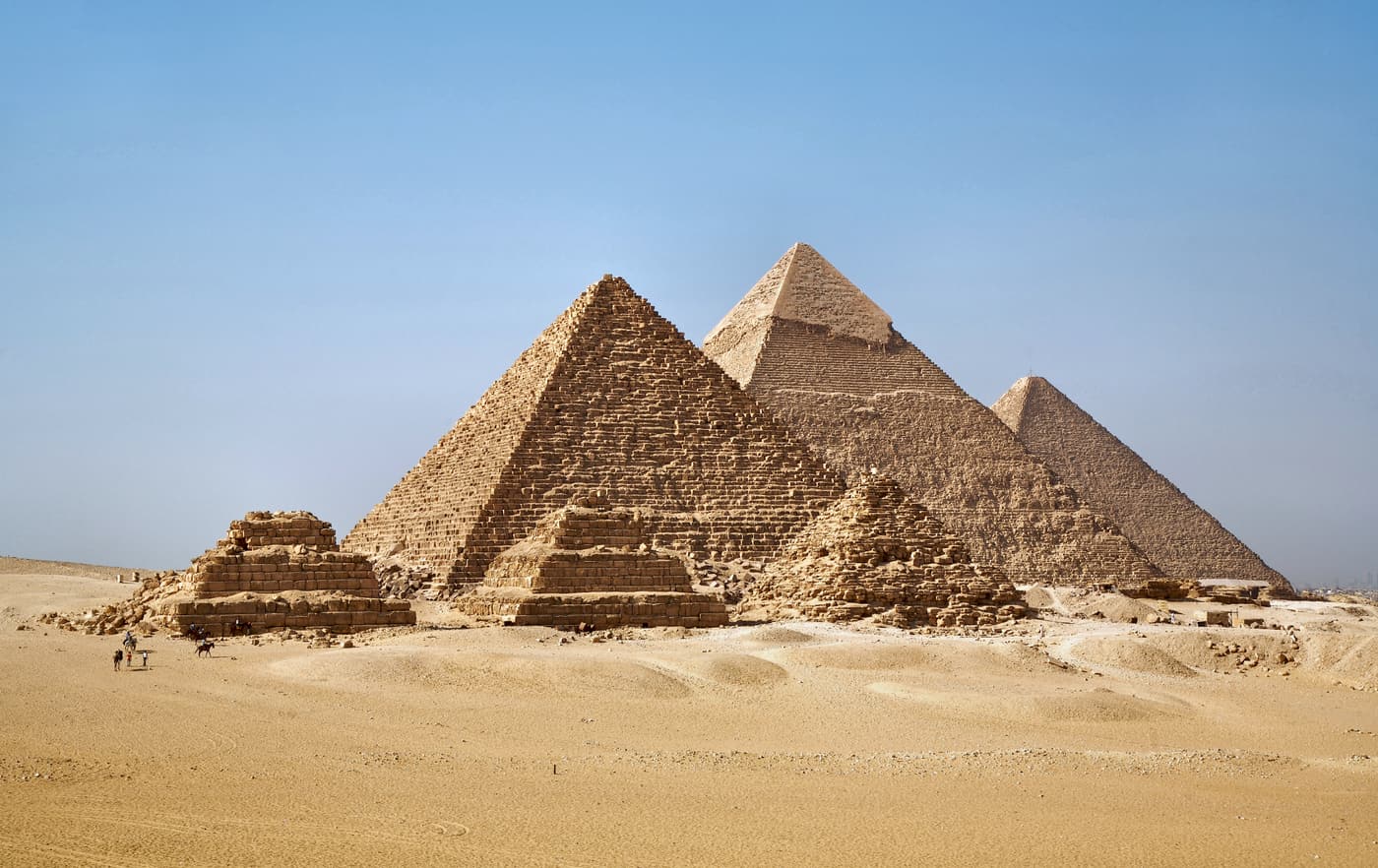 On the Giza Plateau
Panoramic Viewpoint
All the pyramids in a single frame
A low rise in the desert south-west of the pyramids where the whole group lines up in the classic postcard view. It is a stop on the electric bus loop, the starting point for camel rides and close to the 9 Pyramids Lounge.
Opening hours
The plateau generally opens at about 07:00 or 08:00 and closes at around 16:00 in winter and 17:00 in summer, with last admission earlier and shorter hours in Ramadan. Pyramid interiors may close for a break around midday. Hours are adjusted from time to time, so confirm them the day before.
Going inside the Great Pyramid
It is expensive, sweaty and there is nothing to “see” in the usual sense — and almost everyone who does it is glad they did. You enter through a tunnel forced by treasure hunters in the ninth century, stoop up the low Ascending Passage, and emerge into the Grand Gallery, a corbelled hall nearly nine metres high that climbs steeply for almost fifty metres. At the top is the King’s Chamber, lined with red Aswan granite, empty but for a lidless sarcophagus. Allow 30–45 minutes.
- Tickets are limited each day. Buy yours as soon as you arrive, or book a tour that includes it.
- Not suitable if you are claustrophobic, have heart, breathing, back or knee problems, or are pregnant.
- Wear shoes with grip and carry as little as possible; large bags and tripods are not allowed in.
- If the price or the squeeze puts you off, the interior of Khafre or Menkaure gives a similar thrill for far less, and the Red Pyramid at Dahshur is included in that site’s ticket.
More detail on the Great Pyramid page.
Camel and horse rides
A camel ride with the pyramids behind you is a cliché for good reason. Under the new system, camel and horse owners work from a designated area near the panoramic viewpoint rather than roaming the whole site, and an official tariff is posted on signs. Rates are per animal for a set time and are revised periodically — read the board, and expect to pay a little more than the minimum in practice.
- Agree the price, the duration and the currency (Egyptian pounds, not “pounds” that later become sterling) before you mount.
- Pay at the end, once you are back on the ground. Have the exact amount ready.
- Nothing is free: not the photo, not the headscarf, not “just sitting on the camel”.
- Hold on when the camel stands and kneels — lean back as it rises, forward as it goes down.
- If an animal looks thin, injured or exhausted, choose another. Riding in the midday heat is hard on them and on you.
- Horse-drawn carriages also operate; the same rules apply.
The simplest way of all is a tour with the camel ride included: it is arranged and paid for in advance and your guide handles the conversation.
Touts, “helpers” and common tricks
The hustle is far lighter than it was, but it has not vanished — particularly on the approach roads and near the Sphinx. The classics:
- “The entrance is closed / this way to the ticket office.” Tickets are sold only at the official windows and online. Anyone leading you elsewhere is taking you to a stable or a shop.
- The “gift”. A scarf placed on your head or a souvenir pressed into your hand will be charged for. Do not take it; hand it straight back.
- The unofficial guide who starts explaining things, or the man who insists on checking your ticket. Only uniformed staff at the gates need to see it.
- The photographer who offers to take your picture with your phone, then wants payment to return it.
- “Forbidden” areas opened for a tip. Climbing the pyramids is illegal and dangerous; do not be talked into it.
A calm “la, shukran” without breaking stride works better than argument. The tourist police, in white or black uniforms, are stationed throughout the site and will help if someone will not let go.
Eating and drinking on the plateau
The 9 Pyramids Lounge, an open-air restaurant on the southern edge of the plateau, has the celebrated view of all the pyramids lined up and serves Egyptian breakfasts and lunches; it is popular, so book ahead if it matters to you. Khufu’s, a smarter restaurant with a terrace facing the Great Pyramid, offers refined Egyptian cooking and needs a reservation. There are also cafés at the visitor centre. Bring your own water all the same.
The Sound and Light show
After dark, the pyramids and the Sphinx are lit in colour while a recorded narration tells their story. The show lasts about an hour, with seating facing the Sphinx and translations by headset in several languages on a rotating schedule. The script is old-fashioned and reviews are mixed, but seeing the monuments floodlit against the night sky is memorable. Bring a jacket in winter — the desert gets cold. Many rooftop restaurants in Nazlet el-Samman have a partial view of the lights for the price of dinner.
Sunrise and sunset
The site is not open before dawn or after dusk, so “sunrise tours” mean being at the gate at opening for the first clear, cool light — well worth it. Sunset is best watched from outside: from a hotel or guesthouse rooftop facing the plateau, or on a late-afternoon camel or quad ride in the desert to the south and west.
What to wear and bring
- Clothing: light, loose and modest — shoulders and knees covered is respectful and practical in the sun. There is no formal dress code at the pyramids.
- Shoes: closed, sturdy shoes; the ground is sand, grit and uneven stone.
- Sun: hat, sunglasses and high-factor sunscreen. There is almost no shade.
- Water: at least a litre per person, more in summer.
- Cash: small Egyptian notes for tips and toilets.
- Camera: phone photography is generally free; rules and fees for professional cameras and tripods vary, and drones are prohibited without a permit.
Heat and health
From May to September midday temperatures regularly exceed 35°C and can pass 40°C, with reflected glare from the stone. Visit at opening time, rest in the middle of the day and save the museum for the afternoon. Drink bottled water. Even in winter the sun is strong, though mornings and evenings can be surprisingly cool.
Accessibility and families
The visitor centre and the electric buses have made the plateau much more manageable for visitors with limited mobility, although the ground around the monuments is rough and the pyramid interiors are not accessible. The Grand Egyptian Museum is fully accessible. Children tend to love the scale, the camels and the tunnels; keep visits short and early, and carry snacks.
Suggested itineraries
One day: pyramids and museum
Be at the Great Gate at opening. Viewpoint, Menkaure, Khafre, Great Pyramid (inside if you wish), Eastern Cemetery, Sphinx — about four hours. Lunch, then the Grand Egyptian Museum on an early-afternoon time slot until closing.
Two days: the unhurried version
Day one: the plateau in the morning with a camel ride and a tomb, a long lunch with a view, and the Sound and Light show or a rooftop dinner. Day two: the museum at opening, when the Tutankhamun galleries are quietest.
Three or four days: the pyramid age and Cairo
Add a day for Saqqara, Dahshur and Memphis, and another for the Egyptian Museum on Tahrir Square, the royal mummies at the National Museum of Egyptian Civilization and Islamic Cairo, ending with a dinner cruise on the Nile.
Money and tipping
The currency is the Egyptian pound (EGP). ATMs are common in Giza and Cairo, and cards are accepted at hotels, the museum and the ticket offices. Tipping — baksheesh — is part of daily life: small notes for toilet attendants and anyone who performs a service, more for guides and drivers. Carry a supply of small change, which is always in short supply.
Combine your trip
Giza is only the most famous of the pyramid fields along Cairo’s desert edge. Around 40 km to the south, Sneferu’s Bent and Red Pyramids at Dahshur see far fewer visitors, and you can usually go down inside the Red Pyramid on the site ticket — our Dahshur pyramids guide covers the site and the drive from Cairo in detail.
Many travellers continue south on the classic Egypt route via Luxor and Aswan. From Aswan, an early-morning road trip or a short flight reaches the great rock temples of Ramesses II near the Sudanese border; plan that leg with our Abu Simbel temples travel guide.