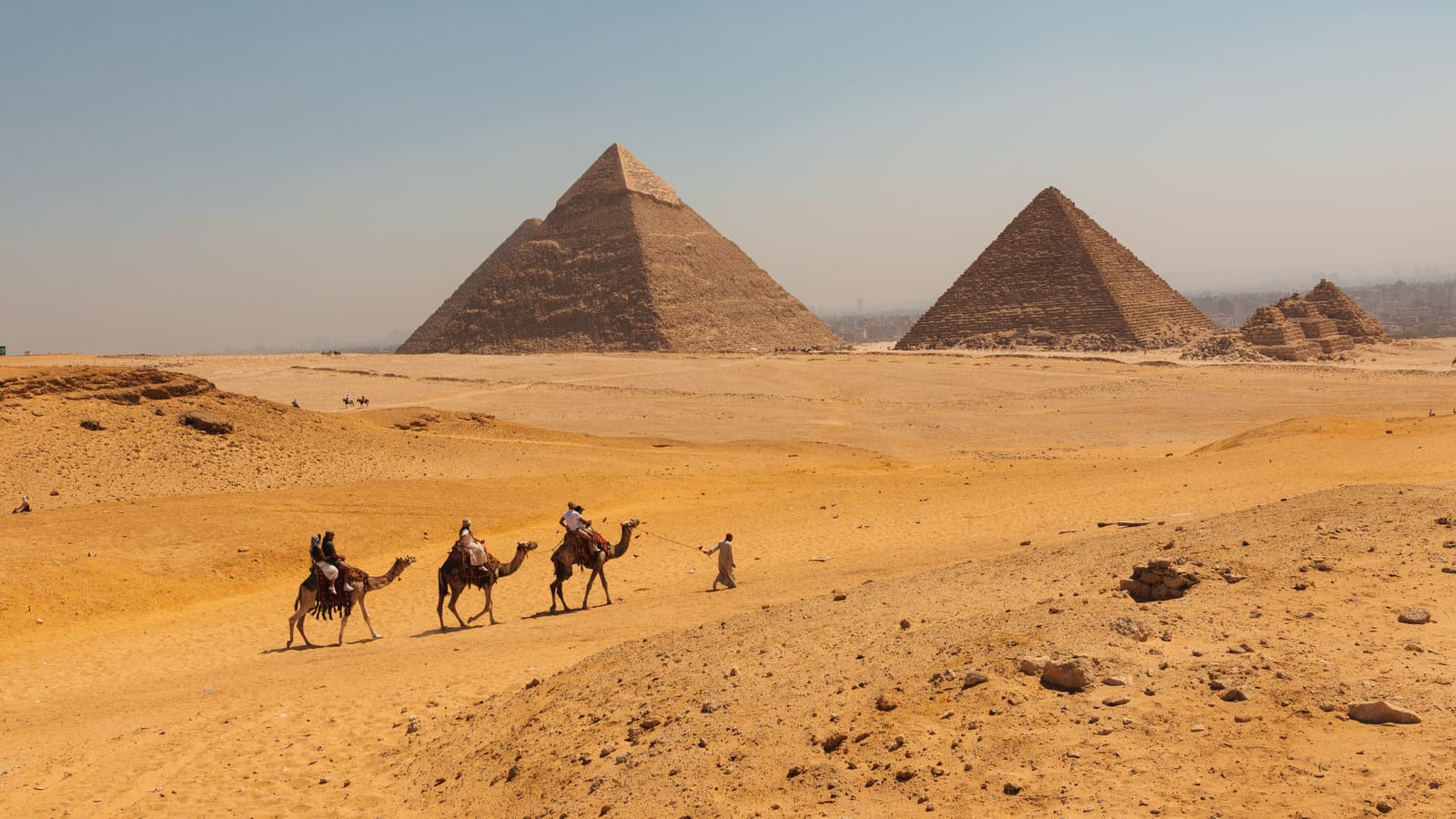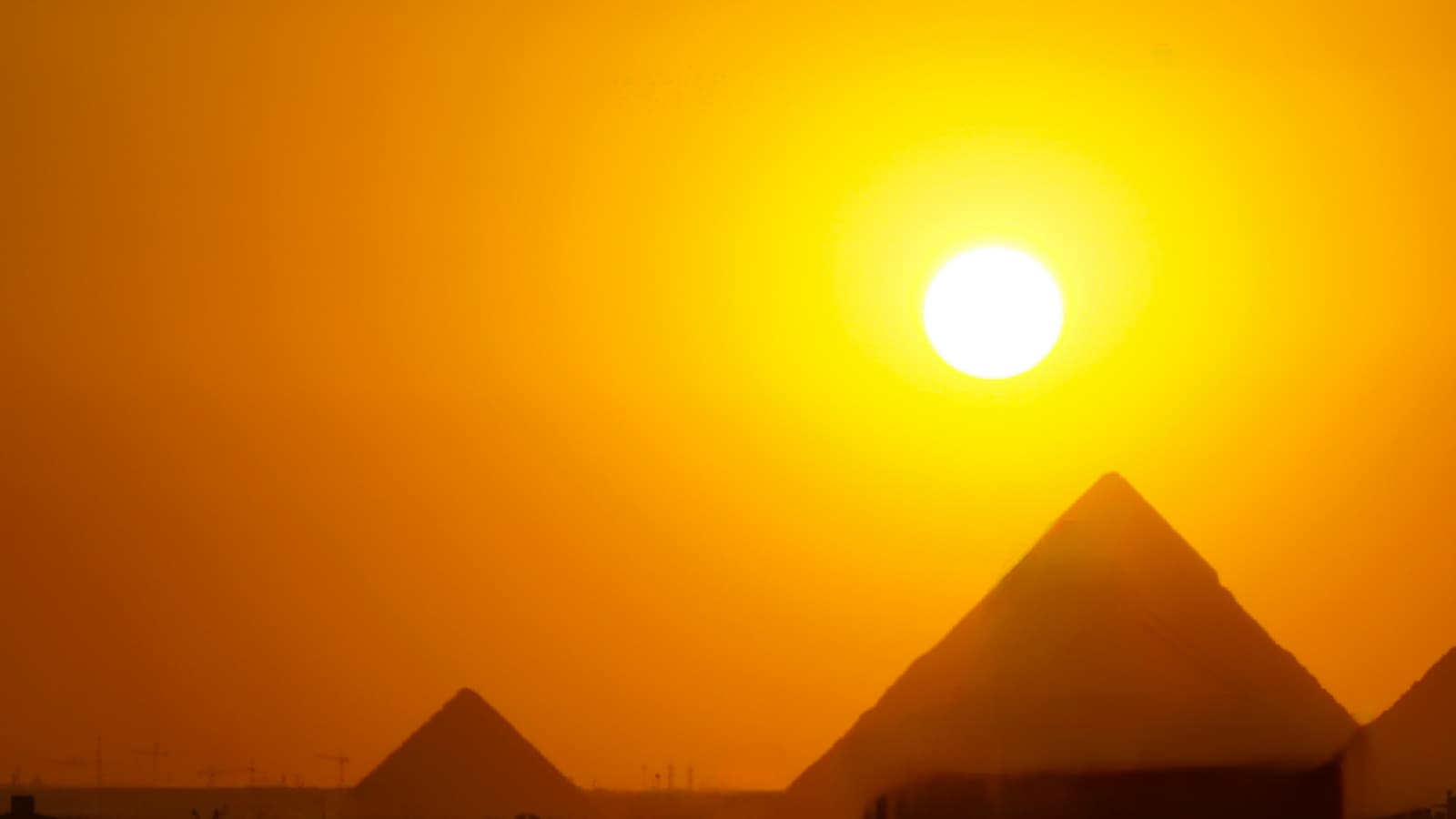
Giza has a desert climate: almost no rain, hot summers, and mild, sunny winters. The best months are October to April, when daytime temperatures are comfortable for walking around a site with no shade. Within that, November, February and March offer the best balance of pleasant weather and manageable crowds.
Month by month
Temperatures are typical daytime highs and early-morning lows for the Cairo area; individual days can be hotter or cooler.
| Months | Typical high / low | Crowds | What to expect |
|---|---|---|---|
| December – February | 19–22°C / 9–11°C | High; peak at Christmas and New Year | Mild, bright days; cold mornings and evenings; some haze |
| March – April | 24–29°C / 12–15°C | High, especially at Easter | Warm and pleasant; occasional hot, dusty khamsin winds |
| May | 32–33°C / 18°C | Moderate | Getting hot; go early |
| June – August | 34–36°C+ / 21–23°C | Lower | Fierce midday heat and glare; cheapest hotel rates |
| September | 33°C / 20°C | Moderate | Still hot, easing late in the month |
| October – November | 24–30°C / 14–18°C | Rising to high | Arguably the best weather of the year |
Winter: December to February
Peak season. The days are sunny and mild — ideal for walking between the pyramids — but early mornings can be genuinely cold, and you will want a jacket for the Sound and Light show. Winter air is often hazy, softening the distant views from the panoramic point. The two weeks around Christmas and New Year are the busiest of the year: book the Grand Egyptian Museum, Great Pyramid entry and hotels well ahead.
Spring: March to May
March and early April are lovely, though this is the season of the khamsin, a hot southerly wind that can fill the air with dust for a day or two at a time. Easter brings a spike in visitors. By May the heat has arrived and the site is best seen before 10:00.
Summer: June to September
It is hot — regularly 35°C and above, with the limestone reflecting it back at you — but it is a dry heat, the skies are clear and the crowds are thinner. If summer is when you can travel, it is entirely feasible: be at the gate at opening, finish by late morning, and spend the afternoon in the air-conditioned museum. Avoid going inside the pyramids in the heat of the day.
Autumn: October and November
The heat breaks in October and the light turns golden. Crowds build steadily as the tour season restarts. For many people this is the sweet spot.
The best time of day
- At opening (07:00–09:00): the coolest air, the clearest light and the fewest people. The queue for Great Pyramid tickets is shortest too.
- Mid-morning to early afternoon: the busiest and hottest hours, when day-trip coaches from the Red Sea resorts are on site.
- The last two hours before closing: quieter, with warm side-light that is excellent for photographs — but leave enough time, as staff begin clearing the site before the official closing hour.
The best day of the week
Friday and Saturday are the Egyptian weekend, when local families and school groups visit in large numbers, particularly in the cooler months. Sunday to Thursday is generally calmer. Egyptian public holidays, including the days following Ramadan and the spring festival of Sham el-Nessim, are best avoided.
Visiting during Ramadan
The dates of Ramadan move about eleven days earlier each year. The site stays open but usually closes earlier in the afternoon, and many restaurants outside tourist hotels are shut until sunset. On the other hand the plateau is quieter, and evenings in Cairo are festive. Check opening times carefully and plan to finish by early afternoon.