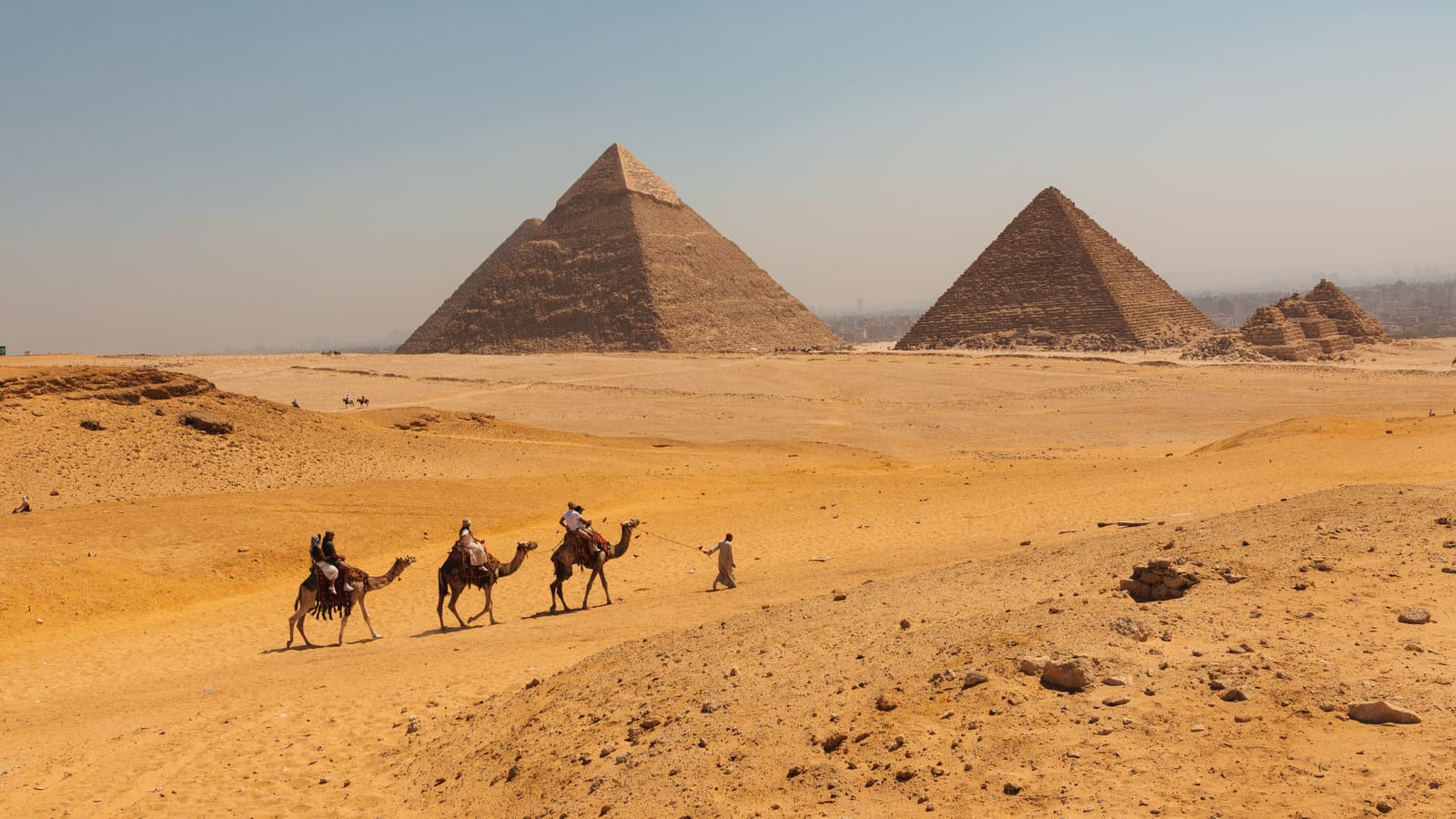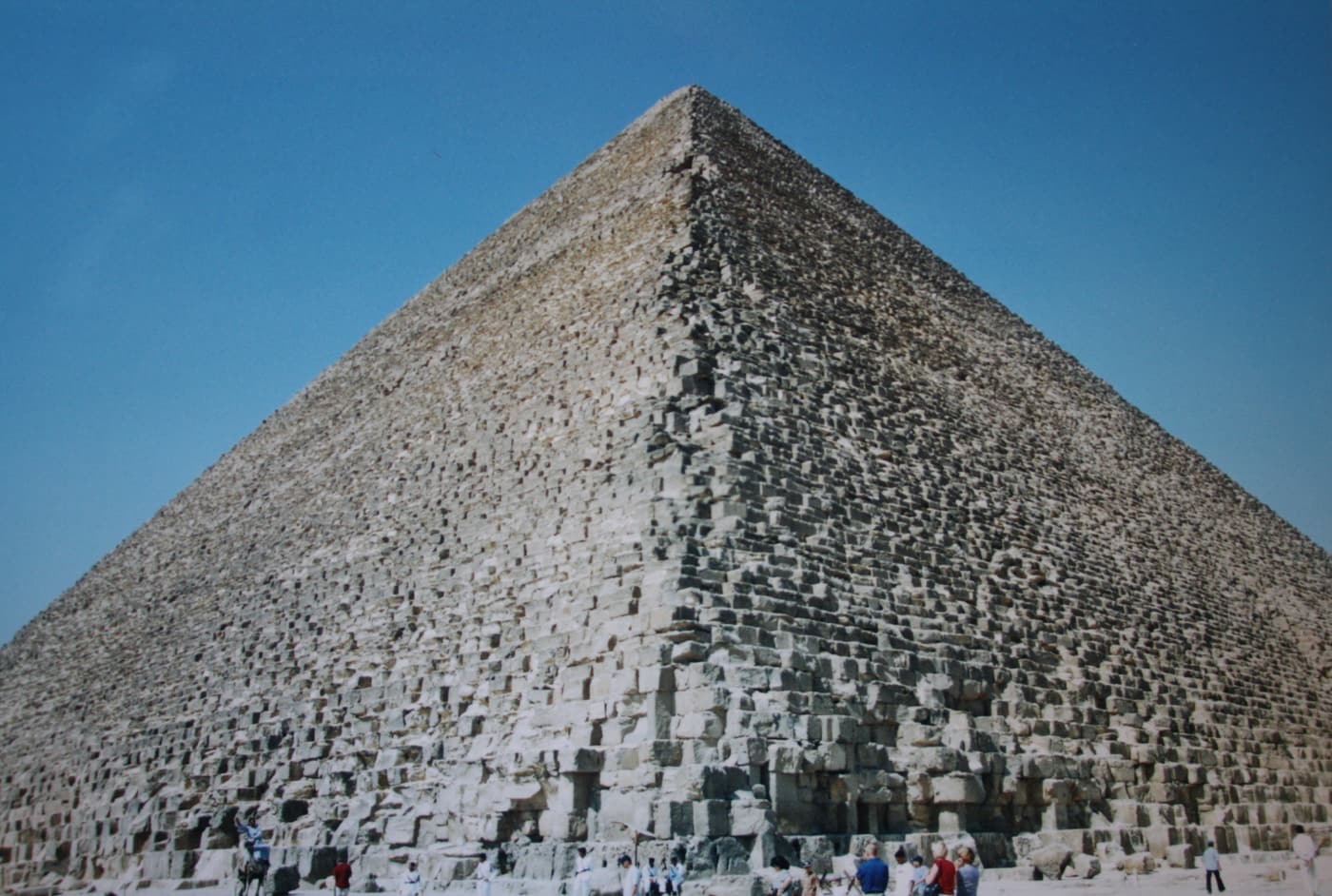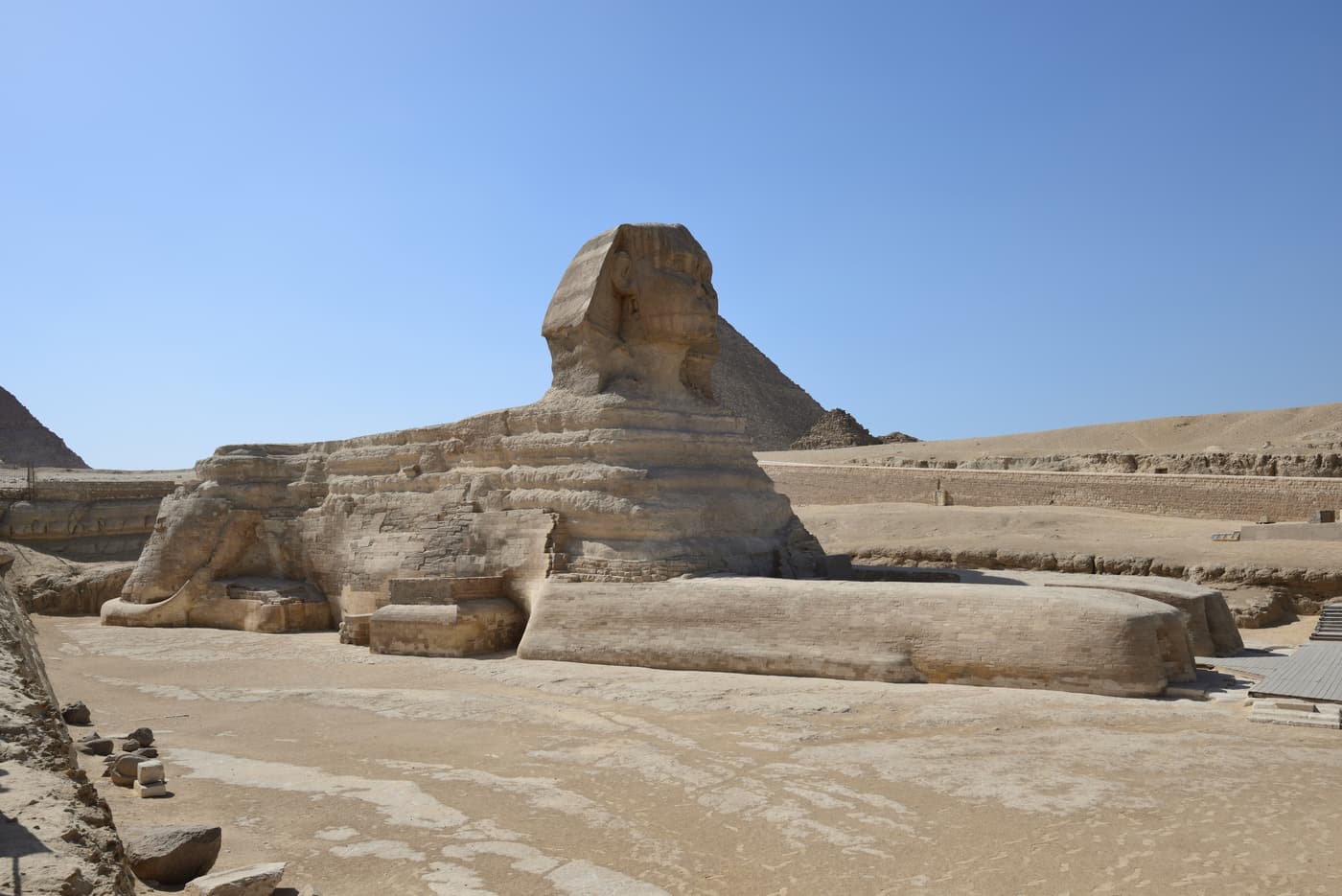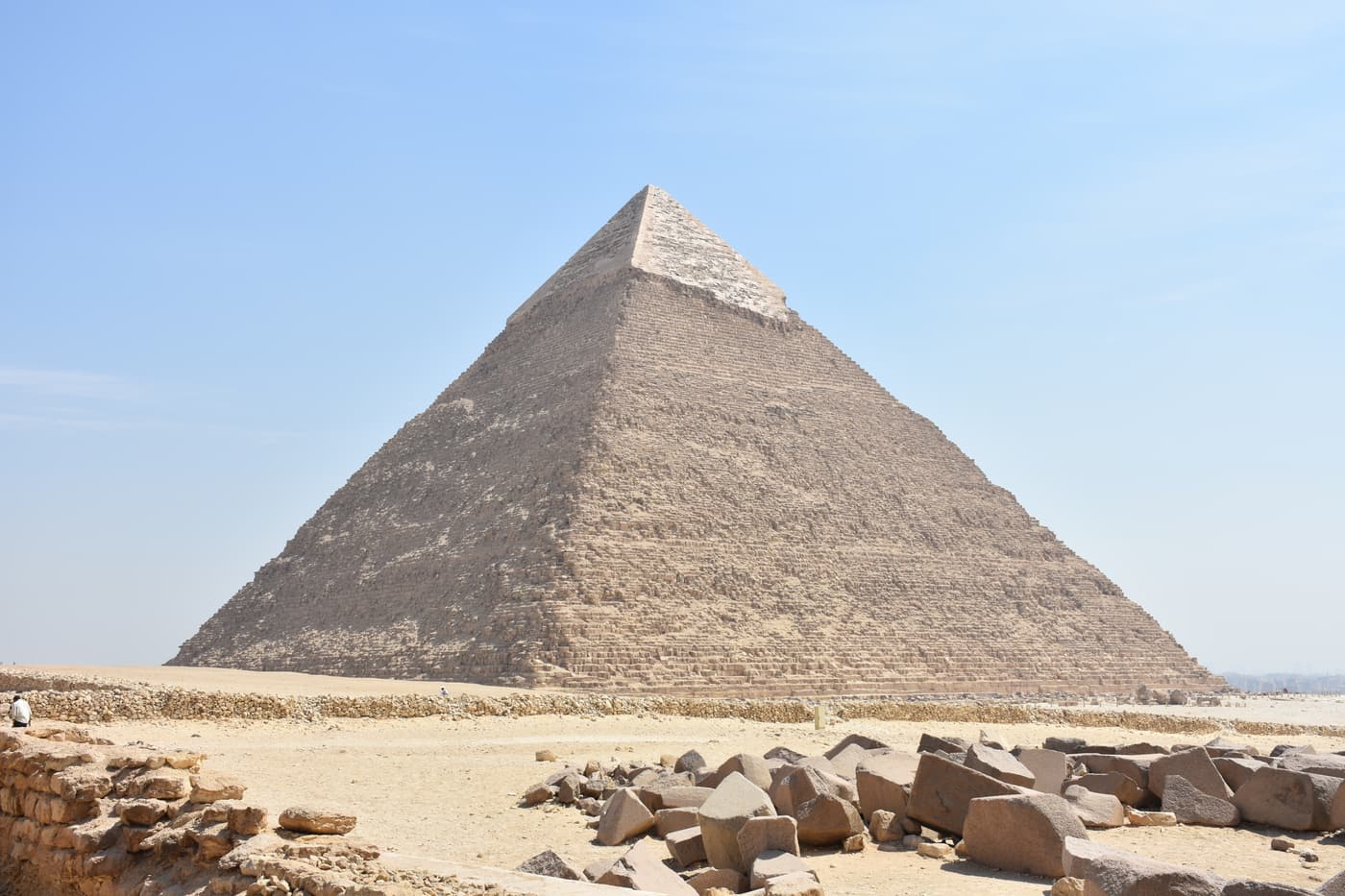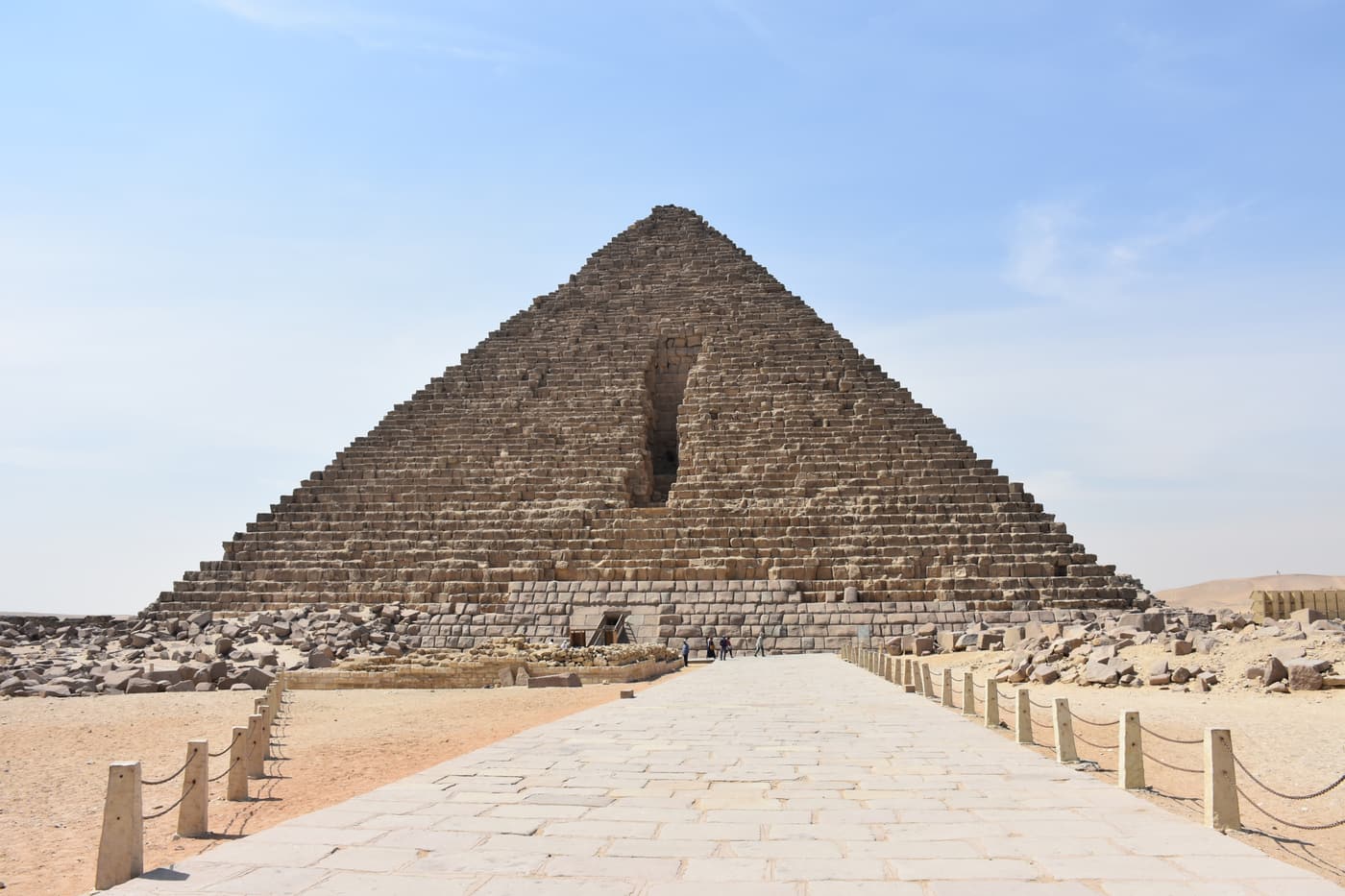
The third and smallest of the great pyramids was built for Menkaure (Mycerinus), Khafre’s son, around 2500 BC. At about 65 metres high it has barely a tenth of the mass of the Great Pyramid, but it was intended to be the most luxurious: the lower sixteen courses were faced in red granite brought 800 kilometres down the Nile from Aswan, much of which is still in place.
The king died before it was finished, and some of the granite was never smoothed. A great vertical gash in the north face is the scar of an attempt to demolish the pyramid in 1196 on the orders of al-Aziz Uthman, son of Saladin; his workmen gave up after eight months. Fine statues of Menkaure with goddesses, found in his valley temple, are among the masterpieces of Egyptian sculpture.
What to see and do at Pyramid of Menkaure
Inspect the granite casing
Walk along the north side to see the contrast between the dressed, polished granite around the entrance and the rough bosses on blocks that were never finished — a snapshot of the building site on the day work stopped.
See the three queens’ pyramids
On the south side stand three small satellite pyramids, one true pyramid and two stepped. Few visitors walk round to them, and the view back over all three great pyramids is superb.
Go inside (when it is open)
The interior is the most elaborate of the three, with a panelled antechamber and a burial chamber lined with granite and roofed with a carved false vault. Menkaure’s basalt sarcophagus was lost at sea in 1838 on its way to England.
How to get to Pyramid of Menkaure
- By electric bus: Menkaure is a stop between the panoramic viewpoint and Khafre.
- On foot: about 10 minutes from Khafre’s pyramid across open, sandy ground.
Insider tips
- This is the calmest corner of the main plateau — a good place to pause if the crowds at the Great Pyramid are wearing you down.
- Interior access alternates with Khafre; check at the ticket office.
- Afternoon light is best on the north face and the granite.
Best tours & tickets for Pyramid of Menkaure
These top-rated experiences are the easiest way to see Pyramid of Menkaure:
 Private tour from €48
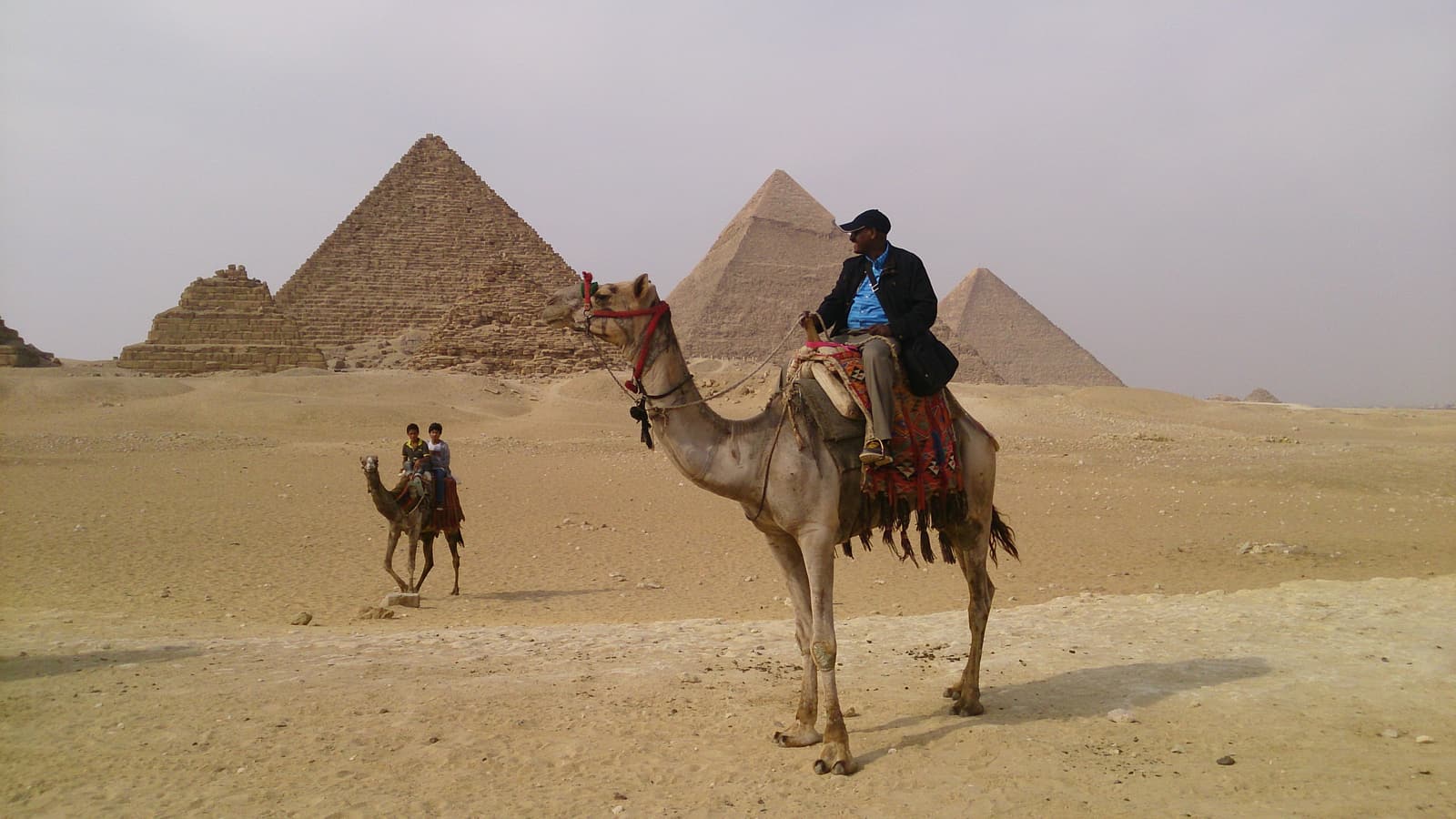
Cairo: Pyramids & Great Sphinx Private Tour with Camel Ride
The most-reviewed Giza tour on GetYourGuide, and deservedly. A private guide collects you from your hotel, walks you through the plateau at your own pace, sorts out the camel ride and keeps the vendors at bay. Longer options add extra sights.
- Your own Egyptologist guide and air-conditioned car
- The three pyramids, the panoramic viewpoint and the Sphinx
- Short camel ride arranged for you
 Walking tour from €37
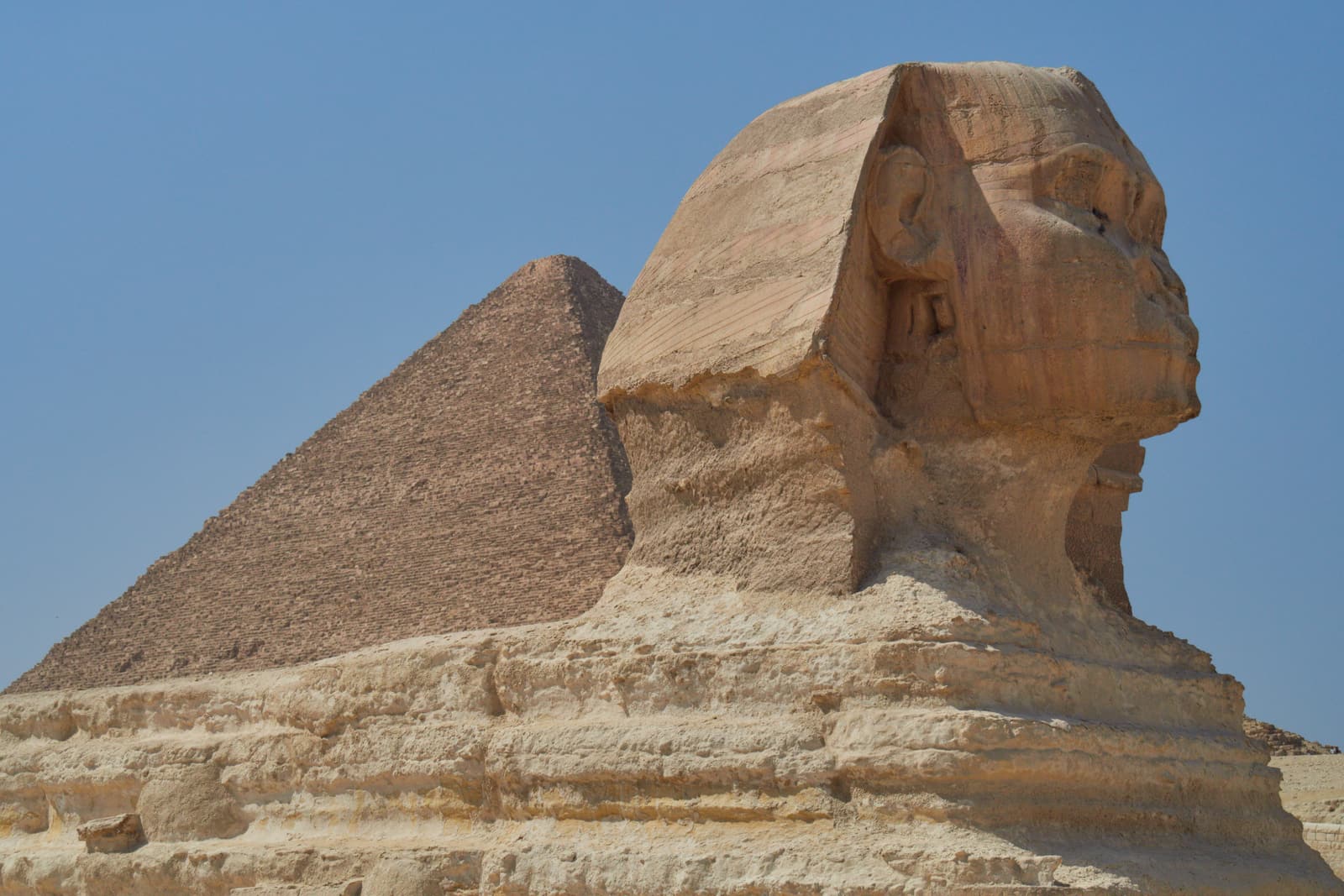
Giza Pyramids Walking Tour: Skip-the-Line, Sphinx & Views
A compact guided walk that starts at the plateau itself, so you are not paying for a car across Cairo. Good value if you are staying in a nearby guesthouse and simply want an expert to explain what you are looking at.
- Meet your guide at the site
- Khufu, Khafre and Menkaure plus the panoramic views
- Finish at the Great Sphinx
 Entry ticket from €15
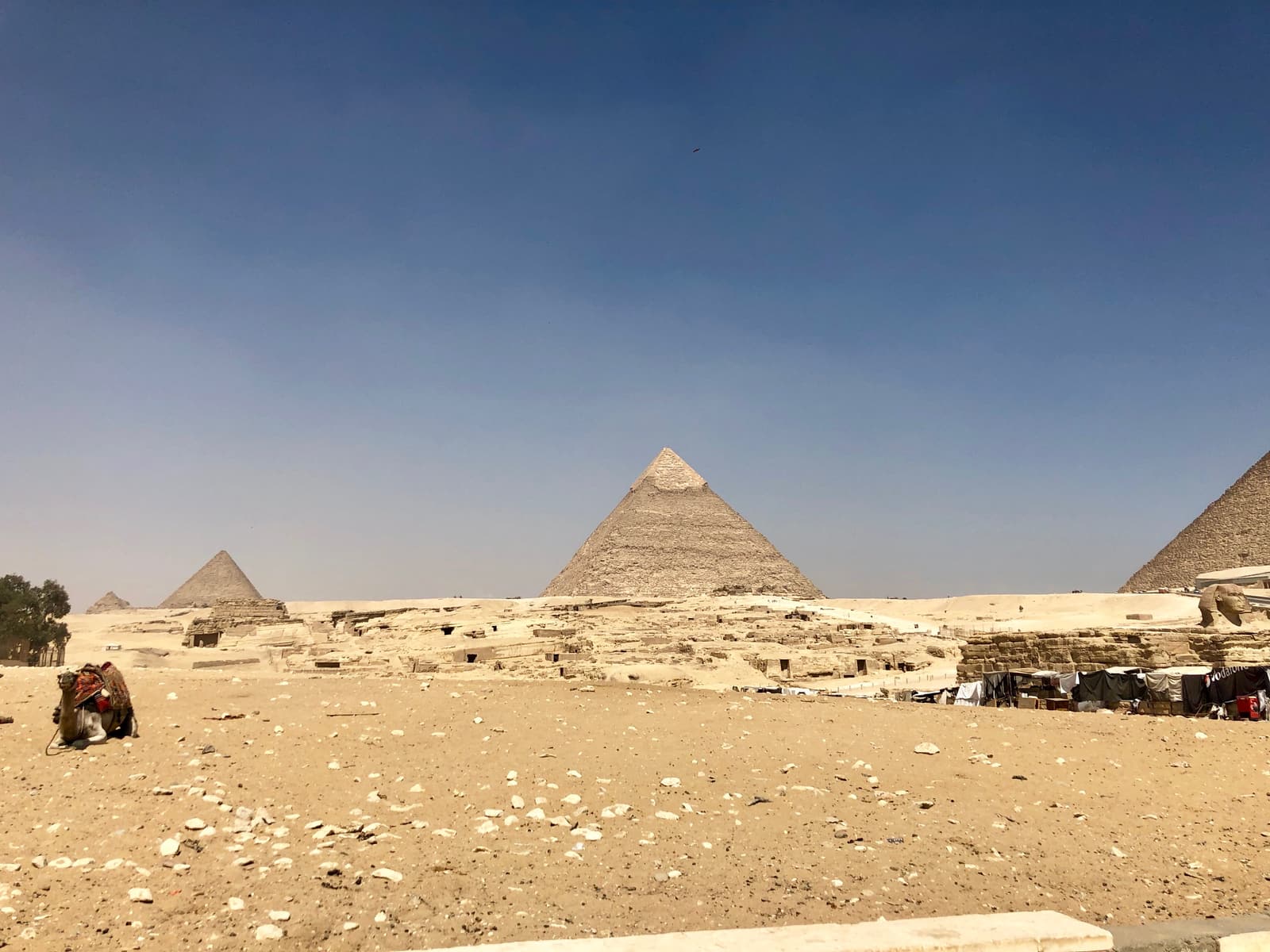
Cairo: Giza Pyramids QR Code Entry Ticket
The general admission ticket for the plateau, delivered as a QR code so you can go straight to the gate. It does not include going inside any pyramid — buy that on site if you want it.
- General admission to the Giza Pyramids area
- QR code sent to your phone
- No waiting at the ticket windows